By Ullekh NP
Speaking about departed feminist icon Gloria Steinem, who had condemned a 1975 UN resolution equating Zionism with racism, Ilan Pappé, renowned UK-based Israeli historian and crusader for Palestinian rights, says that he sees no reason to oppose that resolution adopted by the UN on November 10, 1975, titled “3379”, which called for the “elimination of all forms of racial discrimination”.
“I would not condemn the 1975 UN resolution so I fail to see a clear connection to feminism but do enlighten me,” exclaims Pappé, who is part of the league called ‘New Historians’ who unmasked and challenged conventional interpretations about Israel’s creation using declassified imperial British and local documents.
The 71-year-old academic is a professor at the University of Exeter and an alumnus of the University of Oxford and the Hebrew University of Jerusalem. He has written more than 20 books on the troubled region comprising Israel and Palestine, the latest being Lobbying for Zionism on Both Sides of the Atlantic (2024). Pappé has penned several best-selling works such as The Ethnic Cleansing of Palestine, The Modern Middle East, A History of Modern Palestine: One Land, Two Peoples, and Ten Myths about Israel.
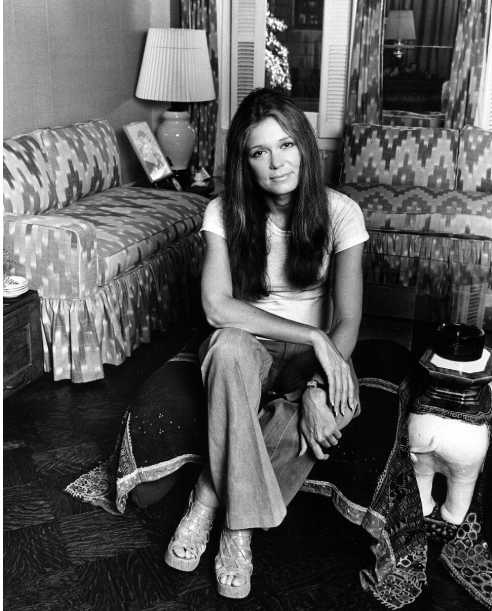
US-born Steinem, who passed away recently aged 92, had signed a letter telegrammed on November 11, 1975, a day after the UN General Assembly described Zionism as a form of racial discrimination, to then Secretary-General Kurt Waldheim, President Gaston Thorn and Assistant Secretary General Helvi Sipila, lashing out at the resolution. Steinem was among the 60 prominent women who shot off the telegram, which said — by way of introduction — that they were “women committed to the worldwide struggle for human rights and equality”. The letter said that they were “appalled at the ‘racist’ label applied solely to the national self-determination movement of the Jewish people”. It added, “We decry this implicit denial of Israeli statehood and this incitement to worldwide anti-Semitism.” They argued that the resolution endangered “the moral principles of the United Nations Charter by abandoning them to cynical political expediency.”
This UN resolution had invoked earlier resolutions of 1963 and 1973, which had said that racial discrimination was imposed by certain governments by means of legislative, administrative and other measures. One of these resolutions had hit out at “the unholy alliance between South African racism and Zionism”. Another had said that “the racist regime in occupied Palestine and the racist regimes in Zimbabwe and South Africa have a common imperialist origin, forming a whole and having the same racist structure and being organically linked in their policy aimed at repression of the dignity and integrity of the human being”. It also referred to a resolution passed at a Non-Aligned Movement meet held the same year in Lima, Peru, “which most severely condemned Zionism as a threat to world peace and security and called upon all countries to oppose this racist and imperialist ideology”.
Now, as with Steinem’s assertion in 2019 that she wouldn’t visit Israel while Benjamin Netanyahu was Prime Minister, Pappé says that the problem is basically with Zionism, not with any single leader alone. “I do not think the problem is Netanyahu. It was and still is Zionism — which is the problem,” he asserted.

Steinem’s statement came following Israel’s denial of entry to US congresswomen Ilhan Omar and Rashida Tlaib, apparently under pressure from US President Donald Trump in his first term, as reports from the time confirm. Reports also said the duo were denied entry over their alleged support for the Boycott, Divestment, Sanctions (BDS) movement.
Before she became world famous as a feminist icon, Steinem had worked for the Central Intelligence Agency (CIA), a fact she had publicly acknowledged later. According to a report in People, in the late 1950s and the early 1960s, she used CIA funds to recruit young Americans to disrupt Soviet Union-organised youth festivals in Europe. It was during this period that she spent time in India, even before the start of the “Hippy Trail” from London to Kathmandu in the late 1950s and long before The Beatles visited Rishikesh in the late 1960s.

