
Professor C. Christine Fair talks about her latest book, ‘The Literature of Lashkar-e-Tayyaba’, which is about the Pakistan-based jihadist terrorist group (LeT) that has launched many attacks on India
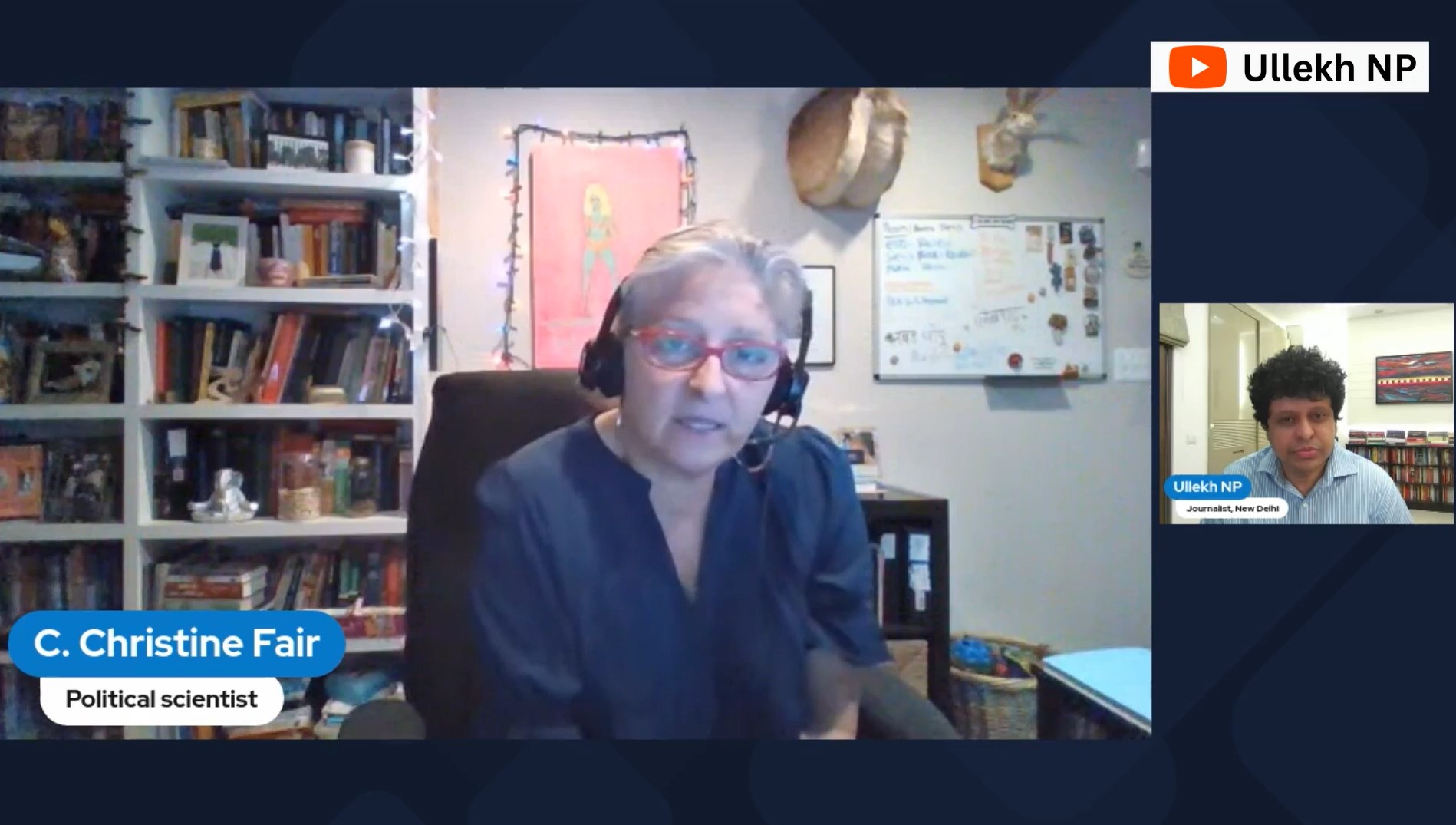
The Hafeez Saeed-led organisation, which Dr Fair describes as the paramilitary arm of the Pakistani army, is a highly disciplined entity that doesn’t act against the national interests of Pakistan while being a killing machine in India, she states.
“We saw them killing the clearly marked Muslims at the Chhatrapati Shivaji Terminus during the 26/11 terror strike,” she says, emphasising that LeT clearly understands the internal security requirements of the Pakistani establishment.
LeT is mindful of internal security requirements of Pakistan, which is why it enjoys the patronage of the army and the establishment. This feature makes LeT quite different from other anti-India terror groups and Islamists within Pakistan, she notes.
Fair also says that she was struck by the similarity in the philosophies of Savarkar and Lashkar-e-Tayyaba. They are both interested in forever wars in their respective religions in order to regain what they perceive to be the lost glory of manliness. “I challenge people to read Savarkar next to Hum Kyon Jihad Kar Rahe Hain (Why Are We Waging Jihad?) by Bin Mohammed (of LeT),” Fair says.
Finding such correlations between of the Hindutva and LeT was an eye-opening aspect of her research for this work, says she. Her latest book, co-authored with Safina Ustad, which is a pseudonym, is a sequel to her own earlier work titled “In Their Own Words: Understanding the Lashkar-e-Tayyaba”. In this book, she analyses the works of LeT, also known as Jamaat ud Dawah (JuD), through books such as ‘Difa-i-Jihad’ (In Defence of Jihad), ‘Mujahid ki Azaan’ (The Mujahid’s Call), ‘Hum Mayen Lashkar-e-Tayyaba Ki’ (We, the Mothers of the Lashkar-e-Tayyaba), ‘Masalah-i-Takfir Aur is Ke Usul O Zavabit’ (The Problem with Takfir and its Principles and Regulations), ‘Shahrah-e-Bahisht’ (Highway to Heaven) and others. Her book also contains biographies of whom LeT calls martyrs.
Fair, who is well-versed in languages in the subcontinent, including Hindi, Urdu and Punjabi, says that this is most likely her last book on LeT. From now on she will focus on Punjabi literature and improve her skills in Farsi so as to write more about Afghanistan, a country, she regrets, was betrayed by American rulers.
 Ullekh NP
Professor C. Christine Fair discusses her latest book, ‘The Literature of Lashkar-e-Tayyaba,’ which delves into the Pakistan-based jihadist terrorist group (LeT) and its attacks on India. She describes LeT as the paramilitary arm of the Pakistani army, highlighting its discipline and alignment with Pakistan’s national interests while operating as a lethal force against India. 😮 Fair points out the similarity in philosophies between Vinayak Savarkar and Lashkar-e-Tayyaba, emphasizing their shared interest in “forever wars” within their respective religions. She challenges readers to compare Savarkar’s writings with those of LeT, shedding light on this unexpected correlation. 🤯 Her book analyzes LeT’s literature and provides insights into its ideology and principles. While this book focuses on LeT, Fair mentions her future plans to concentrate on Punjabi literature and expand her knowledge of Farsi for writing about Afghanistan. 📚🌍
LikeLike