
Noted Supreme Court lawyer and author Rudra Vikram Singh says that from a legal viewpoint, heirs or legal custodians of private documents have all the right to share or not to share them with the public. Singh’s comments come in the wake of Gujarat-based historian Rizwan Kadri’s recent disclosure that he had written to Congress leader Sonia Gandhi to allow physical or digital access to the private papers of the late Prime Minister Jawaharlal Nehru that are in her possession.

Kadri is a member of the Prime Ministers’ Museum and Library (PMML) Society, which was earlier called the Nehru Memorial Museum and Library (NMML). Sonia Gandhi, Nehru’s legal heir since 1984 following the assassination of former Prime Minister Indira Gandhi, has barred public access to a section of Nehru’s papers that were earlier in the custody of NMML.
In 2008, a legal representative of Sonia Gandhi segregated Nehru’s official and personal papers and removed the latter from the museum. It was done with official sanction and the documents were carried away in 51 boxes. Meanwhile, a report quoting the February 13, 2024, annual general meeting of PMML said that in 1982, the Nehru papers were given to NMML for “safekeeping” and not as an “outright gift”.
Singh, who is a legal counsel for the Adani Group, the Indian Council of Social Sciences Research (ICSSR) and is associated with the University Grants Commission as a selection committee member, says in an interview, “Any historian can seek papers from anyone but the person who has the custody of those papers has all the rights reserved whether he or she wants to give the papers or not.”

What are the existing Indian laws that govern the sharing of private papers?
The sharing of private papers is generally governed by the Indian Contract Act of 1872 (related to the sharing or transfer of private papers) and the Indian Succession Act (which deals with the sharing of private papers to heirs). However, if we talk about data protection or private data or paper protection, unfortunately, India does not have a general data protection statute.
Nevertheless, the judiciary has outlined “right to privacy” from the rights available under Article 19 (1) (a) – the fundamental right to freedom of speech and expression – and Article 21 (right to life with dignity and personal liberty) of the Constitution of India. IT Act 2000 was recently amended and two new sections 43-A and 72-A were inserted to deal with data protection.
What are your views on what should be done when controversies like these arise?
I believe there is no controversy in this. Any historian can seek papers from anyone but the person who has the custody of those papers has all the rights reserved whether he or she wants to share the papers or not. According to me, there is nothing Sonia Gandhi would hide from public knowledge as it was kind of in public domain until the personal papers were taken back by her from NMML in 2008. Being the legal heir and custodian of private documents of the late Pandit Nehru, Sonia Gandhi has all the rights to share it with anyone or not to share it with anyone.
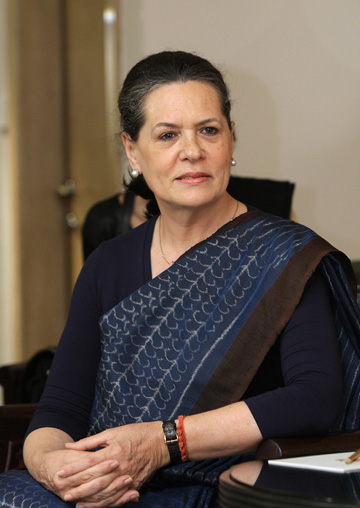
From your experience as a lawyer, who has the authority to give access to private papers of a public figure, and do the heirs have a choice?
Access to private papers can be given only under certain conditions: for example, if there is any contract between certain parties that requires those private papers to be shared with them. Private papers – like wills – have to be given to the heirs. If the heirs do not have the will, after the death of the testator (who makes the will), the heir can access the will through probate.
What are the best practices abroad?
GDPR (General Data Protection Regulation) in Europe provides one of the most comprehensive frameworks for privacy protection, with strict controls on data sharing and access to private information. In the US, estate laws like the Uniform Probate Code ensure that private papers, especially financial or digital assets, are handled according to the deceased’s wishes. Digital platforms like Google and Facebook now offer features to manage digital legacies.
As regards digital wills, countries like Australia and Canada are leading the way in recognising digital wills and ensuring that heirs can manage online assets and documents without compromising privacy. Some countries also provide clear guidelines on the declassification of private papers after a certain period, particularly when it concerns national security or historical significance – like the UK’s 30-year rule for public release of government records.
 Ullekh NP