
FOR MANY YEARS NOW, THE QUESTIONS THAT KEEP surfacing at the very mention of the expression “business schools” are: How relevant are they? Do you really need a business degree to do well in business? Why do you hire an MBA? Among those who consistently raise such questions include top-notch entrepreneurs of the stature of Elon Musk. Their contention is that they are where they are without such degrees. The counterargument has been that there are millions who need the education, rigour and network of the university in order to do well and are not as lucky as the Musks of the world. Being a dropout and making it big is not for everyone, goes the wisdom. A vast majority of people need to go through the dust and grime of formal education, with or without the loans.
But the “to be or not to be” question will endure. The challenge, therefore, is to make business graduates job-ready for Industry 5.0, the new wave of industrialisation in the offing that started first with the steam engine in 1780, electrification in 1870, automation in 1970, globalisation in 1980, and then by the ongoing digitalisation wave. A few others see assembly lines as the catalyst for Industry 2.0. Whatever that is, we have entered the next phase of the fourth industrial revolution, and this one is expected to be far more rapid than what we have seen so far.
In terms of it being human-centric, all indications are that it will entail human intelligence working in harmony with cognitive computing. What we know now about this phase is that it will see mass customisations, and therefore will create higher-value jobs. Industry 4.0 is busy integrating new technologies that include artificial intelligence and big data analytics. For their part, the Japanese have a slightly different terminology for this phenomenon in sight, although both mean the same: Society 5.0, which according to Professor Yasushi Sato from Niigata University, “will follow Society 1.0 (hunter-gatherer), Society 2.0 (agricultural), Society 3.0 (industrialised), and Society 4.0 (information)”. This new phase envisages correcting job displacement and similar hazards of the fourth industrial revolution.
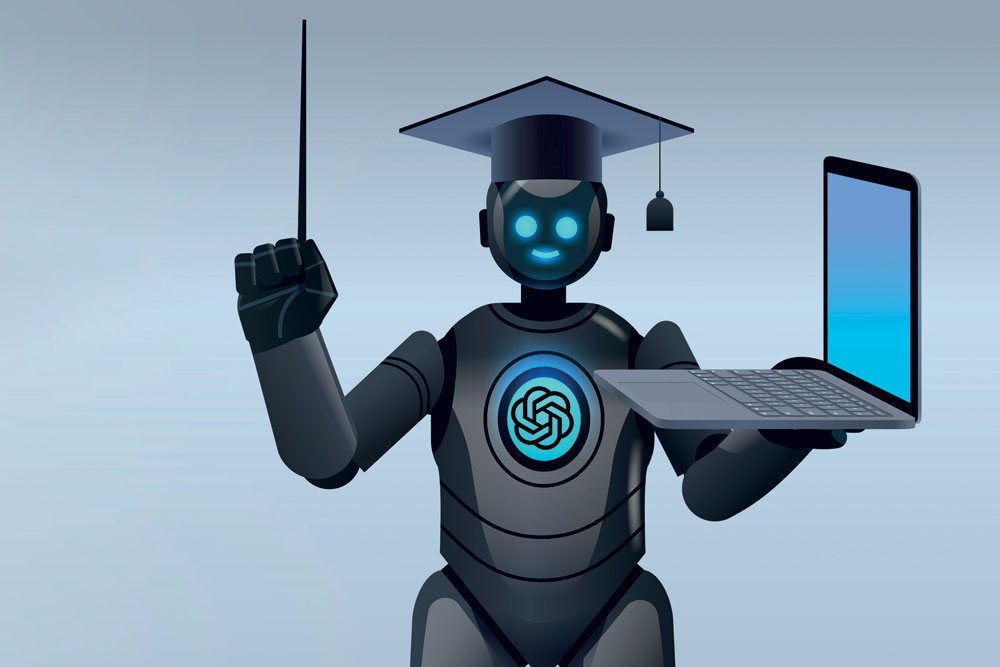
Preparing business graduates for the future of jobs, such as the ones we would see surfacing shortly, is no easy task and requires a quick revamp of the curriculum, at a faster clip than ever before because we are evolving quicker than ever. Things have moved ahead from the last time we addressed the issue on these pages. Last year, talking to Open, India’s ace bureaucrat Amitabh Kant had said that business schools must churn out grads who can handle sunrise sectors. “Management at cutting-edge technology levels is missing because most B-Schools are yet to focus extensively on areas that help accelerate India’s growth. They must equip students so that they are job-ready for new opportunities,” he had said. The demands expected of business professionals have evolved further now—especially since the launch last November 30 of a generative AI app from the OpenAI stable—ChatGPT, which has the potential to break and remake the job scene. As other corporations in the sector brace to keep pace, the changes have only become swifter. Clearly, as a Harvard study suggests, “Today’s business students want more than academic degrees.”
Indian B-Schools have made several attempts to stay ahead of the race and to make their degree holders more competent and efficient even in the global working environment. The analytics-focused PGDBA programme done in collaboration with IIM Calcutta and IIT and the Indian Statistical Institute (ISI) is a course worthy of note here. To cater to new demands, IIM Calcutta offers a post-graduate certificate course in family business management titled PGCFBM. More business institutions are creating short and long courses tailormade for specific needs for both the private sector and the government, which is keen lately on lateral appointments. Like elsewhere in the world, Indian schools are also looking at ways to boost the employability of their wards.
A Harvard Business Publishing essay titled “The Way Forward for Business Schools” elaborates that business schools will prove indispensable if they can help solve the increasingly volatile global challenges facing humanity, such as climate, energy, and economic disparity issues. “By going outside the walls of the university, expanding the traditional view of offerings, and focusing on experiential learning, business school leaders can meet students’ demands for flexibility, purpose, and innovation,” it explains.
Increasingly, it has dawned on B-Schools that early-stage collaboration on the campus with industry employers is the way to go, because they are the ones who best understand the skills for each function that a business graduate will have to acquire. Indian counterparts have also tied up with overseas business schools to share learnings with one another. Collaborative online courses have generated tremendous interest not only among graduates but those who want to reskill. The fact that there has been a rise in the number of courses offered by B-Schools, besides the marked rise in the number of aspirants, proves that business education is much more sought-after than ever before. This is notwithstanding the massive challenge to not fall into the abyss of redundancy amidst uncertainty and volatilities in the job market. Alongside making changes in syllabi and attracting the best of talent to their course amidst challenges from more foreign players looking to enter India, B-Schools here also encounter another scourge: the hiring of faculty trained enough to fulfil new requirements of advanced and industry-oriented courses.
As has always been said, necessity is the mother of all inventions—it is true of new priorities too. Business schools must mend their ways in the face of calls by the likes of the World Economic Forum (WEF) which has insisted on a “skill-first” approach to hiring as part of efforts to address skill shortages. Points out Bengaluru-based writer and former MNC banker Sreejith Sreedharan, who focuses on skills and technology trends, “Relying on historic data and trends, we are still in good time to re-skill/align our competencies favourably to position ourselves against the inevitable frontier technology assault. Most of these technologies have a lead time of a decade or two [optimistically], to become prominent/dominant in their respective fields, artificial intelligence included.”
Job disruptions will certainly be a reality and a natural course of how things change over the years, but then the task ahead for business graduates as well as institutions will be to firm up strategies and visualise the requirements of a more personalised and customised world of Industry 5.0. In his essay, “Business School in the Metaverse”, Chennai-born Vijay Govindarajan, the Coxe Distinguished Professor at Dartmouth College’s Tuck School of Business, who has a penchant for successfully forecasting technology trends long before they become a reality, such as telemedicine, writes that educators and business experts he has listened to believe that the metaverse—a virtual world in its most basic explanation—has the potential to transform business education.
Business schools teach certain values and core strengths that are still valuable—including product development, marketing strategy and finance. The myriad of case studies that students analyse give them an edge in the corporate world. Let’s also not forget that some of the topmost corporate biggies from India are MBAs
Professor Govindarajan writes, “Consider a European business school sending students on a tour of five factories across Asia, Europe, and the United States to interview managers and analyse day-to-day operational efficiencies and best practices—all experienced via virtual reality (VR) headsets, 3D videos, and avatars.” He goes on, “Or consider that by wearing VR headsets, 30 MBA students in the United States can visit the homes and follow the daily lives of four families in southwest India to assess consumer needs in the healthcare and wellness sector.” The Financial Times says in a report from last November that Neoma Business School in France is one of many forward-thinking European institutions that are stepping into the metaverse—an immersive shared digital world where students are represented by 3D avatars. It cites management consultancy McKinsey as estimating the metaverse will generate up to $5 trillion in value by 2030. Yes, faculty and students as well as other members of the staff need to be trained to use these newest tools.
We come back again to learning the career needs of tomorrow, which is why understanding trends that will determine Industry 5.0 fully have to be studied. Efforts are on where both the private sector and the academic are enlisted. Amr Adel explains in a paper titled “Future of Industry 5.0 in Society: Human-centric solutions, challenges, and prospective research areas” what the job requirements for the next level of industries are. These are in fact the challenges that academia faces as far as creating new managers and skilled employees. He avers that people are required to develop competency skills for working with advanced robots. He adds, “Adoption of advanced technology requires more time and effort from the side of the human workers. Customised software-connected factories, collaborative robotics, artificial intelligence, real-time information, and the internet of things must be adopted for Industry 5.0.”
Open has stated on multiple occasions in the magazine that, as of now, as survey after survey finds, a vast majority of Indian business graduates, more than 90 per cent of them, are unemployable in companies that have adopted new technologies to improve efficiencies. Banks have chatbots replacing call centres, messages eliminating several other positions, bringing in the new slogan: “you are your own banker.” This change, in fact, applies to most bank account holders, and was highlighted by an ASSOCHAM study.
But things are improving. In an interview to Open, Mohan Sawhney, a celebrated author and academic, said that some institutes in India stand out and many others are catching up. “My experience at IIM Calcutta broadened my horizons by exposing me to the exciting world of marketing. By combining my background in engineering gained at IIT Delhi with my passion for marketing developed at IIM, I have been able to pursue a successful career at the intersection of technology and marketing. I also developed key relationships and friendships at IIM, which have been valuable at various points in my career,” said Sawhney, who is now associate dean for Digital Innovation, McCormick Foundation Professor of Technology and director, Center for Research in Technology & Innovation at the Kellogg School of Management in Northwestern University, Illinois, US.
Another not-so-acknowledged gain from B-School is the power of the alumni, which pundits say, is not confined to the top-most business schools alone. With students trained not only at IIMs but also other Indian B-Schools doing well abroad and within India as successful managers, the strength of the alumni becomes a launch pad for hundreds of aspirants to highly paid managerial positions. Naturally, it is top-tier business schools both in India and abroad that help aspirants land not only top jobs but also internships. Surveys show that a large chunk of jobs are filled through networking and not through advertisements. This means networking with your alumni provides a great scope for growth.

Coming back to Musk, it is not unwise to see an element of exaggeration in his statements. He had said, “I hire people in spite of an MBA, not because of one.” He had also said that an MBA programme “teaches people all sorts of wrong things … they don’t teach people to think in MBA schools.” This is a recurring remark that one confronts while dwelling on business education. Look at the facts: a majority of American corporations and Fortune 500 companies are helmed by MBAs. In addition, when it comes to professionalising an institution, even the most difficult-to-get-along-with innovators hire MBAs. An overhaul is in order, for sure, just as in other academic streams, thanks to the fast-changing world around us. But business schools teach certain values and core strengths that are still valuable—including product development, marketing strategy and finance, as experts tell you.
The myriad of case studies that students analyse give them an edge in the corporate world, they state. Let’s also not forget that some of the topmost corporate biggies from India who have climbed the ladder and broken the glass ceiling are MBAs: Hyderabad-born Satya Nadella, CEO of Microsoft, is an MBA from the University of Chicago and an alumnus of the Manipal Institute of Technology. Shantanu Narayen, an engineering graduate from Osmania University and an MBA from the University of California, Berkeley, is the chief of Adobe Inc. Google and Alphabet CEO Sundar Pichai, a BTech from IIT Kharagpur, is an MBA from the University of Pennsylvania. Similarly, Nikesh Arora, CEO and chairman at Palo Alto Networks, has an MBA from Northeastern University. Many other highly successful people in the US, including Raghuram Rajan, former Reserve Bank of India governor, are products of IIMs. “Their grounding in business education equipped them for these positions because as non-Americans, they would not have made it big had it not been for their formal education,” says an Indian-origin Silicon Valley executive with an MNC, adding, “It is possible theoretically, but not as easy as it is for those who are from within the US. People may counter it by saying the US is a land of unrestricted opportunities, but we know how it works in practice.”
While we delve into the deficiencies as well as the prowess of business education, it remains central to that debate that a major makeover is needed to enable new managers to enable a smooth transition to the next wave of the industrial revolution. For that simple reason, it is important to look at the pitfalls of the academia-industry connection, and the shortcomings of both the streams in meeting its goals. Accepting those limitations is key to going beyond them. An in-depth study by Morteza Ghobakhloo of the School of Economics and Business, Kaunas University of Technology, Kaunas, Lithuania, identifies 11 actions and approaches that serve as the enablers of Industry 5.0 transformation. The academia, government, the private sector, and all stakeholders will have to work towards that. The study elaborates with a contrarian view. “It is imperative to note that the Industry 5.0 paradigm must not be understood as the fifth industrial revolution and a replacement for Industry 4.0. Industry 5.0 represents a forward-looking agenda that complements Industry 4.0’s unique features by introducing sustainability as the core objective of the digital industrial transformation. In other words, Industry 5.0 involves reviving the lost “inclusive sustainability” dimension of Industry 4.0. To strike a balance between economic growth and socio-environmental development, Industry 5.0 entails the integrative collaboration of industry and stakeholders.”
The jobs that will be hot going ahead, according to engineering consultancy firm TWI, call for workers with science, technology, engineering, and mathematics (STEM) skills; those with soft skills (such as communication, teamwork, and adaptability); trainers and facilitators for up-skill projects
The jobs that will be hot going ahead, according to engineering consultancy firm TWI, call for workers with science, technology, engineering, and mathematics (STEM) skills; those with soft skills (such as communication, teamwork, and adaptability); trainers and facilitators for up-skill projects, and so on. A New Delhi-based government official who has handled key assignments in the education segments tells Open that the National Education Policy (NEP) approved by the Indian government will bring about “a transformative change” in education, especially in business education, since the primary focus of the NEP is on providing a more holistic and multidisciplinary education. He quotes reports and other officials to argue his point. “I am sure that Indian students will be more than prepared for Industry 5.0 that you are talking about,” he asserts. Continuous improvement and learning will remain the cornerstone of this new approach, he adds.
Interestingly, many experts in education as well as technologists themselves feel that breakthroughs in technology, such as Generative AI—which writes and creates images with prompts—will only help students focus more on creative aspects of learning and leave the rest to these apps, provided they are regulated. In a related article (https://shorturl.at/ayzIV), Open had quoted a report in Business Insider that Institut auf dem Rosenberg—one of the world’s most expensive schools—feels that it is hypocritical to ask its students not to use AI products. The report quotes Anita Gademann, the school’s director and head of innovation, as saying that she had been preparing for AI five years earlier. It adds, “Gademann says students are taught to use AI ‘as a tool’, and she’s particularly excited by text-to-image generators like DALL·E. Seventh-graders used it for a history project to visualise the Middle Ages and the ‘discrepancies between nobility and peasants’.” The Open report adds that another student used DALL·E to generate pictures in an essay about the role of women in World War I.
DALL·E creates videos, images, and sounds based on commands, and has left the creative world in a tizzy. From fantastical works of art to instructive videos to even magazine covers, the image-generating tool is all set to revolutionise the way humans create and consume art and design and has been hailed and criticised alike for its powers—from celebrations of beauty to the dangers of fake imagery. There are more such reports about AI enthusiasts who are kicked about how new technologies can aid education.
This should be music to the ears of B-School faculty who can get technologies to rev up the teaching system and achieve global standards, in terms of securing high global rankings, at a time when foreign universities are offering online degree courses. Any such effort to upgrade our B-schools calls for more funds, and a greater level of publications by our institutions, besides the challenges we have already brought up in the previous paragraphs. According to reports, there are rays of hope. As of January 2023, there were several Indian B-Schools that are accredited by the Association to Advance Collegiate Schools of Business (AACSB International, an American professional organisation). Many others are accredited by agencies such as AMBA and Equis.
More importantly, incorporating studies of technology in business education cannot be over-emphasised along with the growing shift in businesses towards technology-oriented ones. Reinventing and redefining business education will have to be a constant process and, fortunately, there is soaring enthusiasm in India to forge ahead and meet international standards. The columns and stories in the coming pages reflect that paradigm shift.
 Ullekh NP
The relevance of business schools and the need for business degrees in today’s rapidly evolving landscape are subjects of ongoing debate. While some argue that formal education is essential for many individuals to succeed in business, others, including prominent entrepreneurs like Elon Musk, question the necessity of business degrees. The key challenge for business schools is to prepare graduates for Industry 5.0, the next phase of the industrial revolution, which is expected to be marked by rapid advancements in human-centric technologies, mass customization, and higher-value jobs.
Industry 5.0 will require human intelligence to work in harmony with cognitive computing, integrating technologies like artificial intelligence and big data analytics. Business schools need to revamp their curricula rapidly to align with the changing demands of the job market. To stay ahead, Indian B-schools are exploring collaborations with industry employers, offering specialized courses, and partnering with overseas institutions for knowledge sharing. Collaborative online courses and the need to attract qualified faculty members trained in advanced and industry-oriented subjects are other challenges faced by business schools.
In summary, business schools must adapt quickly to offer relevant education and produce graduates capable of thriving in the evolving business landscape of Industry 5.0.📚🏫💼 #BusinessSchools #Education #Industry50
LikeLike